
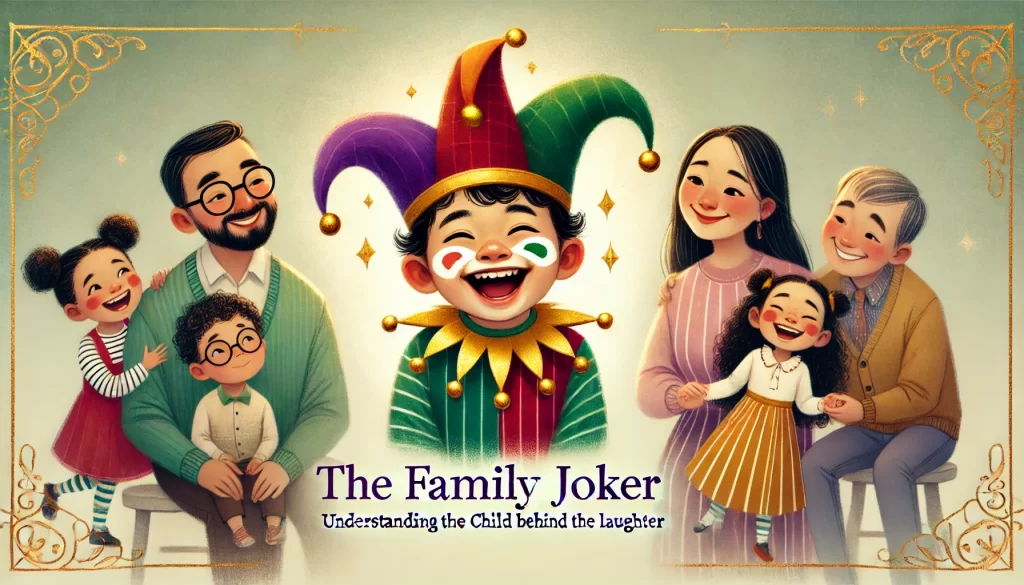
Some children become the ‘joker’ of the house, using humor to seek attention, mask emotions, or navigate family dynamics. But what’s really behind the laughs, and how can we support them beyond their jokes?
In every family, there’s often one child who takes on the role of the “joker” – the one who lightens the mood, makes everyone laugh, and uses humor to navigate family dynamics. While this can be a delightful and entertaining trait, it’s essential to understand the deeper psychological factors behind this behavior. What drives a child to become the household comedian, and how can parents support them in a way that fosters emotional well-being and balance?
Why Do Some Children Become the ‘Joker’?
- A Coping Mechanism for Stress
Humor can be a powerful way for children to deal with stress, family tensions, or even their own insecurities. A child who constantly jokes might be masking deeper anxieties or emotions they find difficult to express. - A Desire for Attention and Validation
Laughter is a form of approval. Children who feel overshadowed by siblings or seek parental validation may use humor to attract attention and gain appreciation. - A Way to Diffuse Conflict
Some children use humor to ease tensions in the family, playing the role of a peacemaker. If conflicts arise often, the ‘joker’ might instinctively try to defuse difficult situations by making light of them. - A Reflection of Their Natural Personality
Some kids are naturally witty, creative, and love entertaining others. If their humor is healthy and doesn’t stem from anxiety or insecurity, it’s simply an expression of their outgoing nature. - A Shield Against Vulnerability
Some children use humor as a defense mechanism to avoid showing vulnerability. They might joke about their own struggles to prevent others from seeing their true emotions.
How to Support and Guide a Child Who Uses Humor Excessively
- Encourage Open Emotional Expression
Let your child know it’s okay to feel and express all emotions—not just joy and humor. Create a safe space for them to talk about their worries or fears without the need for jokes. - Acknowledge Their Feelings, Not Just Their Humor
Instead of only reinforcing their humor with laughter, acknowledge their other qualities too. Praise their kindness, intelligence, and creativity beyond just their ability to make others laugh. - Teach Them Emotional Awareness
Help them recognize when humor is being used as a defense mechanism. Encourage discussions about different emotions and validate their non-humorous expressions as well. - Balance Fun with Serious Conversations
While laughter is essential in a household, ensure that deep, meaningful conversations also have their place. Show them that family bonds are built on more than just entertainment. - Help Them Set Boundaries with Humor
Sometimes, children who constantly joke may struggle to recognize when humor is inappropriate or hurtful. Teach them to understand social cues and the impact of their jokes on others. - Support Their Natural Talents
If humor is their passion, nurture it in a positive way—encourage them to explore creative writing, drama, or stand-up comedy in appropriate settings where they can refine their talent.
A child who takes on the role of the household ‘joker’ is often a mix of entertainer, stress-reliever, and attention-seeker. While humor is a beautiful trait, it’s important to ensure that it isn’t masking deeper struggles. By providing emotional support, validation beyond their humor, and encouraging healthy self-expression, parents can help their child grow into a well-rounded individual who knows when to laugh and when to embrace other emotions as well.
Parenting isn’t about changing who your child is—it’s about understanding them deeply and helping them flourish in a balanced, emotionally healthy way.